
Why we don’t talk about the important things, and what to do about it

“Out beyond ideas of right-doing and wrong-doing there is a field. I will meet you there.”
Rumi, 13th century Persian Sufi poet
Introduction
Last time, we talked about how the Columbia space shuttle disaster was ultimately caused by a dysfunctional culture. One of the hallmarks of a dysfunctional culture is that important subjects just aren’t talked about. Issues aren’t resolved, and the best people leave.
In previous articles, we have talked about how to improve communication in a business, and how to improve decision-making. The tools we suggested work very well in routine situations, but there are occasions when you will need something more.
In any team, there are always topics that are too emotionally difficult to discuss, and so they get swept under the carpet. Subjects that are undiscussable in organizations become so in order to avoid surprise, embarrassment or threat to key people. Think about this a moment. Where is this happening in your business? Why?
The more pressure a team is under, the more likely that undiscussables will flourish. Whilst the best-performing teams find ways to have these discussions, too many teams have rooms littered with elephants that everyone is doing their best to ignore.
This is an important part of our [Framework] because very often, it is these elephants that are holding the team back, and if left unchecked, will prevent the business from delivering its strategy and its potential. This is because they are often personal: some members of the team will be thinking that another member isn’t doing a good enough job, for instance. Or because they challenge long-held beliefs and ways of working that will need to change if the business is to keep developing. What takes a business to Good will not take it Great.
Problems are best solved when a team has open dialogue, high collaboration, solid challenge and learning. These behaviours don’t always come naturally. In this post we will present ideas to improve our ability to discuss the elephants in the room without our emotions getting in the way.
Why we struggle with emotional issues
The Stress response is well-understood by scientists. When we find ourselves in a stressful situation, our hypothalamus triggers the release of adrenaline, which has knock-on effects all over the body. These effects prepare the body for sudden activity: the heart beats faster, blood is sent to the muscles, airways in the lungs open. This is also known as the fight-or-flight response; we are ready to either fight or run away.

This response was hugely useful when we lived in fear of lions and leopards, but is less so now, when we meet fewer predators but more traffic jams and cold callers. The stress response essentially focuses on helping us to survive for the next 30 seconds; longer term tasks such as digestion, the immune system, body repair and maintenance are sidelined. This is why living under high stress for long periods is so detrimental to our health.
The other thing that stops happening under stress is clear logical thinking. Our instincts take over. Unfortunately, what kept us alive when we lived on the savanna doesn’t work nearly so well in business meetings.
For better or worse, we are stuck with our biological heritage, so we need to learn how to work with it. And like much else that we discuss, we can learn to do this using tools and structures.
How we behave when things get difficult
Difficult topics can trigger the stress response, and our options are still to either fight or fly. We all know people who fly off the handle when things get tough, and if there are two people like that, a full-scale shooting war can erupt. Fighting manifests as the need to win the argument. When someone is trying to win, they stop caring about the real underlying truth – they stop being curious.
Those who avoid confrontation and fly are less obvious, but watch closely and you can spot them, too. In a team environment, flying shows up as minimising – closing down the conversation or just simply sitting back and keeping quiet until it is over. When someone minimises, they stop saying what they really think.
We all have different thresholds at which the response is triggered, and we all have our own tendency as to which way we will go.

Conversational capacity
We call the ability to discuss an issue Conversational Capacity. If a team’s conversational capacity exceeds the difficulty of the topic, a productive conversation can be had.

A team’s level of conversational capacity consists of:
- The individual capacity of each member
- The behaviours that others show when people have moved from the sweet spot
- The structures used to allow better conversations.
Let’s look at each in turn:
1. Improving our own conversational capacity
We can generally tell when our stress response is kicking in. Our palms feel sweaty and our pulse rises. If we are self-aware, we can take action here. The right action depends on our tendency to fight or fly.

If we are usually a fighter, we should force ourselves to show greater levels of curiosity. The first curiosity skill is testing our own point of view; we should do this through questions:
- Ask for someone with a different perspective to set out their point of view
- Ask for someone to challenge your own point of view
The second curiosity skill is inquiry. We should deliberately seek to increase our own understanding of other people’s opinions:
- Ask people WHY they think what they do
- Explore points of their argument that you don’t agree with or understand.
Some sample questions to increase curiosity might include:
- What are you seeing that leads you to that view?
- Can you tell me more about the way that you are looking at the issue?
- How did you reach that conclusion?
If we are usually a flyer, we need to increase our levels of candour. This can require some bravery….
The first candour skill is stating our position. We should state our opinion clearly and concisely, avoiding scope for ambiguity. So, instead of asking “Should we maybe consider some ways of making our meetings more productive”, we should state “An agenda would dramatically improve the productivity of our meetings.”
The second candour skill is setting out the process of how we reached our conclusions. We should explain why we think what we do, using data, anecdotes or any other supporting evidence.
2. Helping others
If the whole team has a shared language of conversational capacity, it becomes easier to address situations which have become difficult. It can be difficult for any of us to stop fighting or minimising on our own; we have stopped thinking clearly at that point. But if someone else points out what’s happening, we can often recognise what we are doing and take a step back.
Appoint someone in your team (ideally with good emotional intelligence) to monitor conversations and call out winning or minimising behaviour. Allow individuals to collect themselves, perhaps with a short break, and remind them of the behaviours they should be displaying. If you haven’t been following a structure, do so.
This is a skill of its own. Just as we talked earlier about working on the business, not in it, you could call this working on the conversation, rather than being in it.
3. Structures
A clear structure can help to have a better conversation. When you knowingly embark on tackling a difficult issue with a group, try a structure like the following. We have previously discussed methods to help make better decisions, and they can be brought in here too.
- Get the right people in the room
- Identify clearly the issue to be discussed
- Decide on how the decision will be taken. Is it the opinion of the leader, a subset of the group, a majority of the group, or all of the group?
- We’ve talked about how we are hierarchical and follow the most senior person. Let the most junior person start by stating their position on the issue, why they think what they do and what their underlying assumptions are.
- The other participants ask the individual any clarifying questions.
- Then proceed to the next person in order of seniority.
- Continue around the table. If anyone shows a tendency to win or minimise, gently point it out.
- Reverse the assumptions: What if each is not valid?
- Are we now able to reach a decision?
Just this process so far can help resolve issues, as everyone is clear as to where everyone else stands, and why they think what they do. Different opinions very often stem from different underlying assumptions; this helps break that down. The Wright Brothers, the first to attain powered manned flight, would often find that at this point, they had both switched sides of the argument…
As an aside, it is good habit for you as leader to often try to speak last – you will get a wider range of ideas emerging. Just watch that your people don’t realise you are doing this; if they do, they may sit on the fence until they know which way to go.
If the issue is still unresolved:
- As a group, try to seek a new creative solution that addresses everyone’s concerns.
- If this is still not possible, then make your decision by the method you originally decided, explaining your reasoning carefully.
Don’t forget to create solid action plans to execute your decision, otherwise you have only wasted time.

But sometimes, the really difficult issues need more. They are difficult because they are emotional, and you may have to go to an emotional place to resolve them. It can be a positive sign to see anger, sadness or tears at this point; just be wary of winning and minimising behaviours. Use a different language here: ask people to explain how they feel about the issue, why they feel like that, and what they would like to do about it.
Take time to identify as a team the issues that you aren’t discussing. These are the things that will come back to bite you, as we saw with the Columbia disaster. How will you address them?
Only the best teams can handle these types of discussion well; you may need to be careful about letting it go ahead, but it can turn into a group therapy session that is transformative for your team.
What happens when someone can’t do it?
Self-awareness and the ability to manage our own emotions are attributes that we have previously discussed as being essential for good leaders. They also make for good team members, and we have talked about the importance of all employees behaving in the right ways as well as delivering for the business.
If individuals are low in conversational capacity, they are probably regularly breaching your Values, and you need to deal with their behaviour through your performance management system. And yes, if they fundamentally can’t change, you will need to make a difficult decision about their future in the business. Sometimes as managers, we find that we are simply not qualified to address the deep underlying issues that drive dysfunctional behaviour. This may seem harsh, but such individuals can hold everyone else and your business back.
Conclusion
It may seem overly simple, but from our research we propose that paying attention to what people talk about and what they don’t talk about is an often-overlooked part of creating Peak-performing organisations. Add to this a conscious awareness of who is allowed to speak and who is expected to stay silent, and you have two powerful leverage points to improve an organisation.
Those of you who read our article on communication might have recognised that everything we have discussed is about reducing the Pathos and maximising the Logos. This is largely right. Pathos is great for persuading people to follow us, but when you need to work out the right course of action, Logos is a better friend. Similarly, those of you familiar with Thinking Fast and Slow will see this as a way to increase the amount of System 2 slow thinking, reducing System 1 fast thinking.
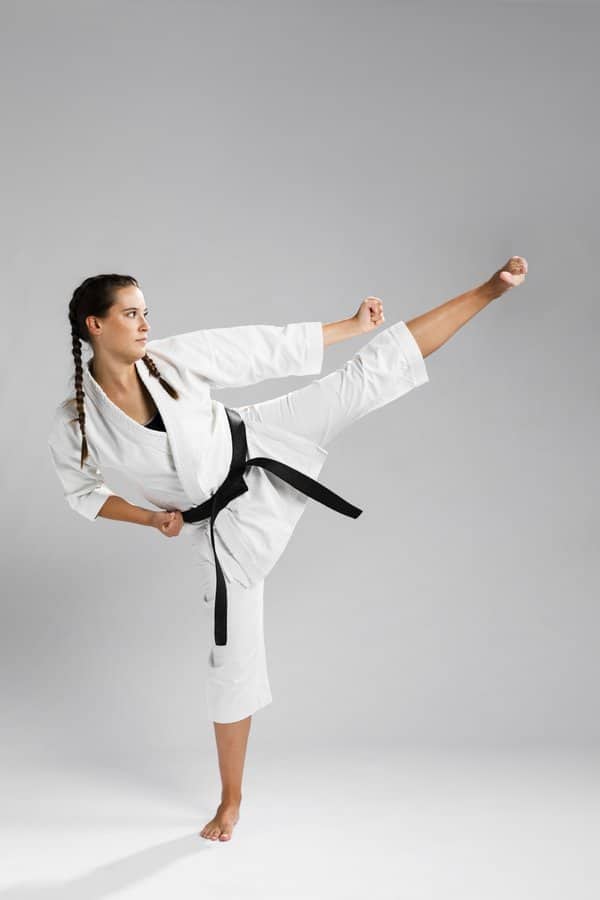
The quote from Rumi with which we started this article is a favourite one. Achieving mastery over our own thought processes is like a mental martial art. It takes practice, effort and years to become truly proficient, and we will continue to make mistakes. But the other people in the discussion are not our opponents, and victory is not winning the argument. We are fighting our own ego and the fierce emotional reactions that protect it.
Let us know your successes and failure with dealing with elephants in the room. Next week, we will build further on the subject of teams, and look at ways to improve the quality of the thinking we do in teams.
igesia Consulting helps businesses and the people in them to become peak performing. We understand what the very best organisations do, and work with companies like yours to give you the skills, plans and structures to do the same.
Recent Comments